
Getting Iron County Court Records
An Iron County case lookup through Utah Courts Xchange is the fastest route to public case history. It can surface some District documents too. Justice Court items work differently. Use that court's local online request form, or contact the Iron County Justice Court directly. For District civil, criminal, domestic, probate, and judgment files, the Cedar City District Court clerk is the office to call.
- Identify District, Justice, or Juvenile Court and find the case or citation number.
- Name the exact order, filing, hearing, date range, recording, or transcript needed.
- Inspect Xchange first when the information is public and covered online.
- Submit the local Justice request or the Utah Judiciary request. A focused request may also be made at the proper clerk counter or sent by mail as the official form directs.
- Call 435-865-5335 for Justice records or 435-867-3250 for District routing, confirm fees, and receive an inspection, plain copy, or certified copy.
Most District Court locations offer public terminals under Xchange guidance. Before driving to Cedar City, call ahead to confirm access, hours, printing, and what identification you will need.
Iron County Request Form Fields
The local form asks for a case or citation number, the violation date, the violations or charges. It also wants record status, a record-type agreement, and a delivery choice. Some releases, such as controlled records, require government-issued identification. You can upload PDF, JPG, or PNG files. The form warns about timing. Release may take up to ten business days. The blank local request form lays out the whole workflow.
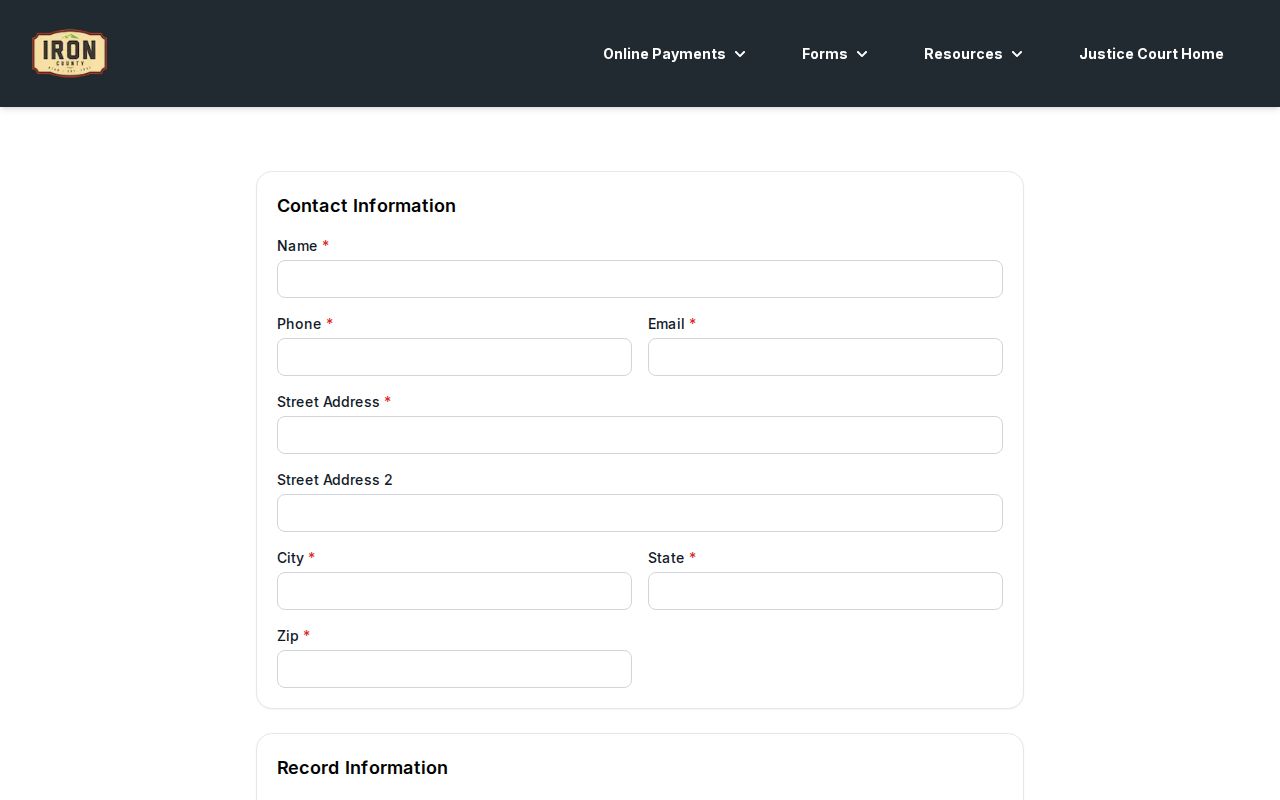
That is why a case identifier and a precise description of the record belong on paper before submission. Upload identification only if the controlled official form requests it.
| Request detail | Useful entry |
|---|---|
| Court | Fifth District Court or Iron County Justice Court |
| Identifier | Full case or citation number |
| Record | Exact order, filing, or hearing recording |
| Date | Document or hearing date and narrow range |
| Format | Inspection, plain copy, certified copy, audio, or transcript |
| Access basis | Legal entitlement when the item is not public |
Court Record Types
Any Iron County court record request should separate the index from the item behind it. Each product carries its own access path, price, and purpose.
- Case history: chronological proceedings, charges, pleas, hearings, dispositions, judgments, accounting, parties, and lawyers when public.
- Document image: a pleading, motion, order, judgment, or other filed paper available online or from the clerk.
- Certified or exemplified copy: a clerk-authenticated reproduction, with exemplification adding another level of authentication.
- Audio or video: the court's digital recording of a proceeding, requested from the court where it occurred.
- Transcript: a separate written verbatim record prepared by a transcriber.
- Judgment abstract or transcript: a distinct judgment product that should not be confused with a hearing transcript.
A printout of case history is not the file itself. An audio recording, in the same way, is not a transcript.
District and Justice Record Custodians
Utah runs a unified state-court clerk structure. The Iron County Clerk in Parowan keeps county administrative, election, and similar government records, but state judicial dockets are not that office's job. Send your request to whichever court type created the record.
Cedar City District Court Clerk
40 North 100 East
Cedar City, UT 84720
435-867-3250
Iron County Justice Court Clerk
82 North 100 East #101
Cedar City, UT 84720
435-865-5335
Broad civil, criminal, domestic, probate, and judgment files run through the District clerk. The Justice clerk handles county misdemeanors. Infractions, traffic, parking, and small claims sit there too. Juvenile requests, when authorized, go to the Fifth District Juvenile Court clerk at 435-867-3200. The official Justice Court page posts its location and quick actions.
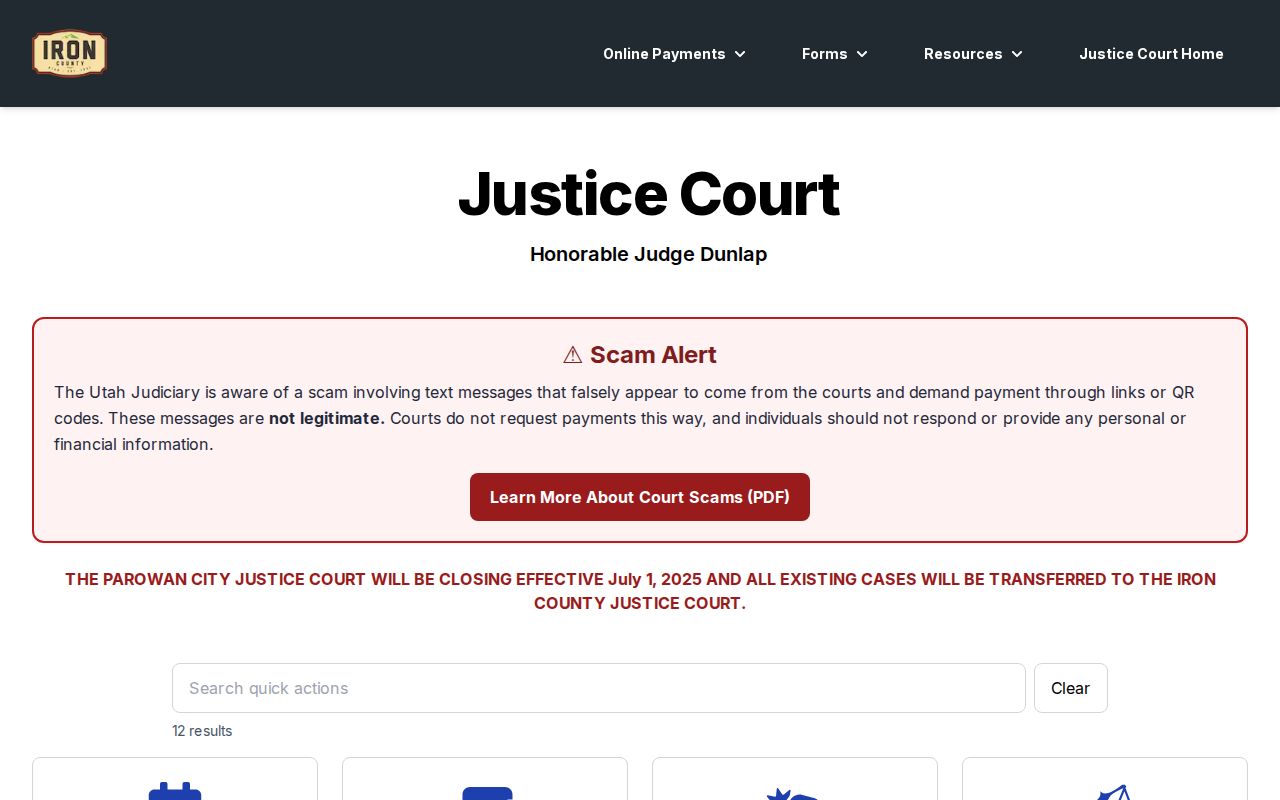
The image helps distinguish the judicial counter from the separate county clerk's office.
Inside an Iron County Court Record
What is inside varies with case type and classification. A public civil history might list filing and service events, motions, and hearings. Judgments and satisfaction entries may appear too. A public criminal history could show charges, plea and disposition dates, proceedings, judgment, and accounting. Probate files often mix public index items with protected material.
| Case number | The court identifier used for searches and requests. |
|---|---|
| Parties and roles | Public names with codes such as plaintiff, defendant, petitioner, or respondent. |
| Docket history | A dated sequence of filings, settings, rulings, and disposition entries. |
| Pleadings | Petitions, complaints, answers, motions, and responses when public. |
| Orders and judgments | The signed rulings that control over a short index label. |
| Exhibits | Filed evidence subject to judicial control and access classification. |
Share the least personal detail necessary. Just because a field is public does not make it right to republish addresses, birth dates, financial data, victim information, or facts about minors.
Iron County Audio Record Requests
Request a hearing recording from the court where it happened. The Fifth District form wants the court, county, caption, case number, judge or commissioner, courthouse, and courtroom. It also asks for the hearing date and time, requester contact, format, and delivery details. Non-attorneys should use the correct court channel. Attorneys follow e-filing instructions instead. The Utah Courts transcript and recording instructions walk through the request sequence. Payment steps are there too.
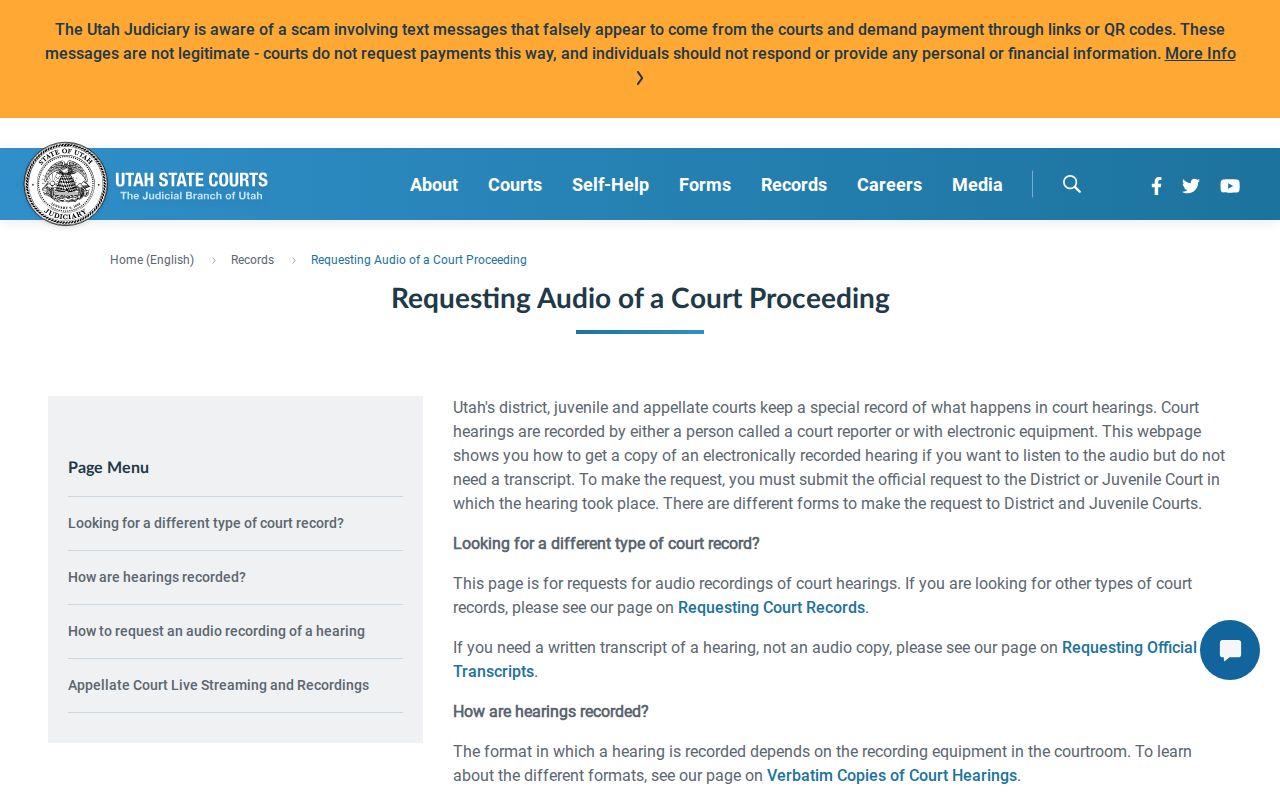
Finding the event on a court calendar is one thing. Payment and delivery are separate steps. A court recording is not a public livestream, and courthouse rules bar visitors from photography and recording.
Fees and Certified Copies
The statewide fee page lists inspection as free. Copies, authentication, recordings, media, delivery, and staff work can each add cost. Ask for an estimate before filing anything broad. The statewide and Iron County adopted fee schedules clash on some research-time and certified-page amounts, so have the proper clerk confirm which current schedule governs your item.
| Statewide item | Published amount |
|---|---|
| Paper copy | $0.25 per sheet |
| Certified copy | $4 per document plus $0.50 per page |
| Exemplified copy | $6 per document plus $0.50 per page |
| Electronic storage medium | $15 per unit |
| Audio or video | $15 per half-day |
| FTR Cloud recording | $10 per recording |
| Actual delivery cost |
The current Utah Courts fee page is the source to check before ordering.
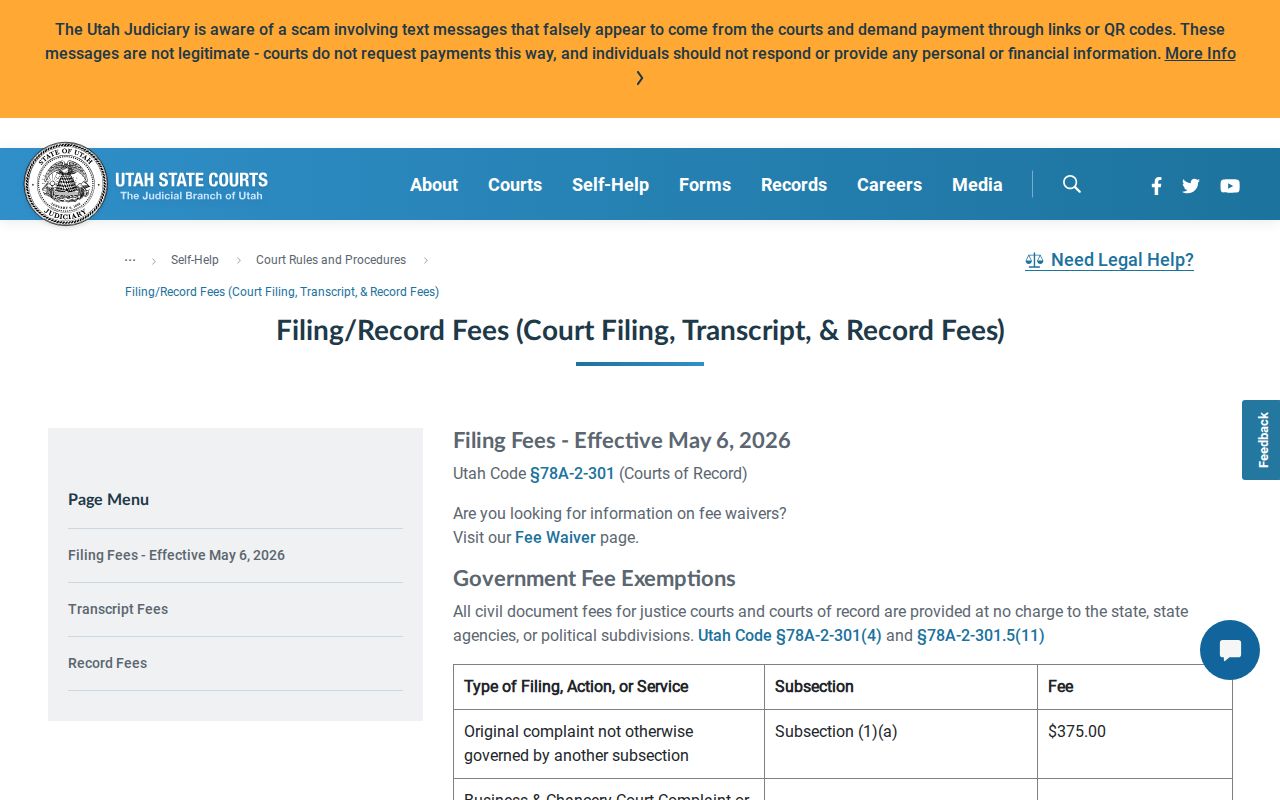
The published schedule names the product and its charge. Still, get a clerk estimate whenever staff time, postage, or multiple certifications come into play.
Iron County Response and Denial Path
The local Justice form says release may take up to ten business days. Utah Courts says staff usually respond within ten business days to central Judiciary requests. Treat that as an ordinary window, not a promise. A complex or restricted record may not arrive on day ten. If access is denied or material is redacted, ask for the classification and the reason. Rule 4-202.04 opens a motion or petition review path. The right route depends on whether the court keeps jurisdiction.
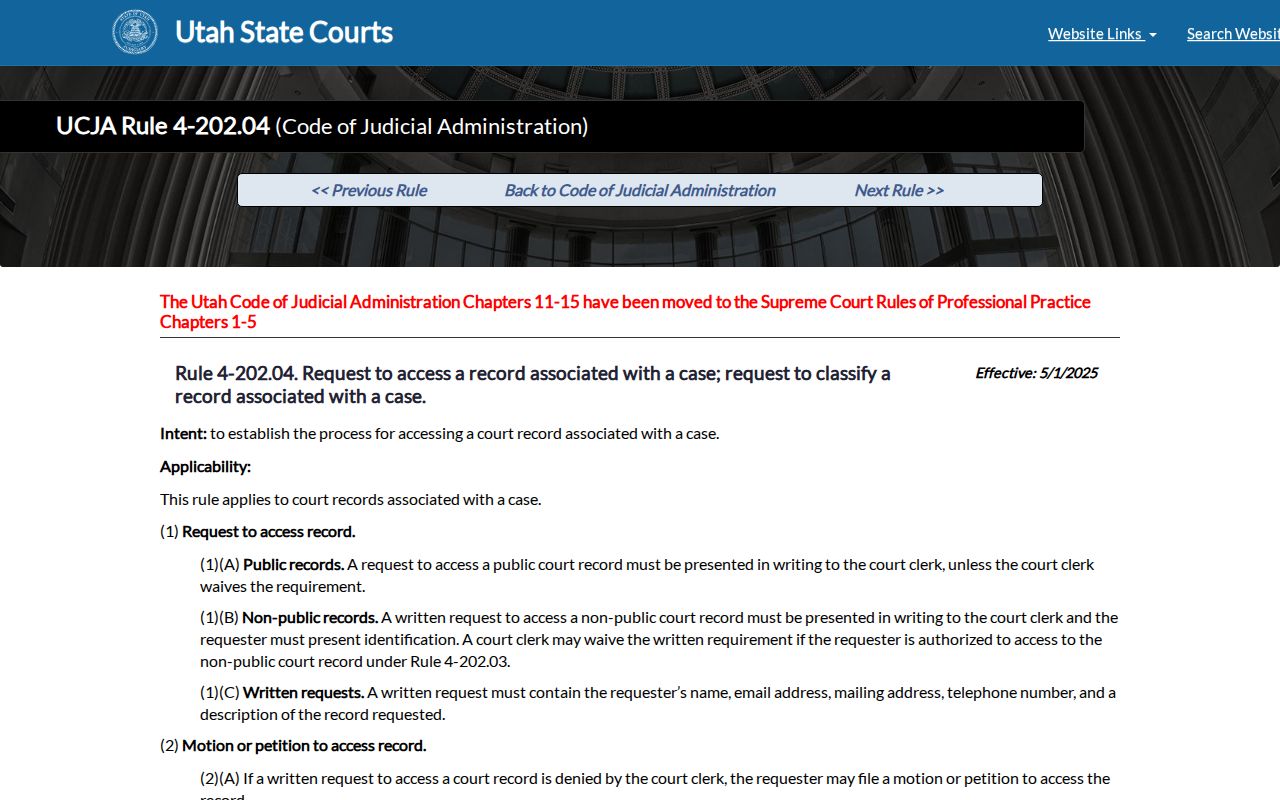
The rule-based review process is the right answer to a denial. Running public searches again and again will not bypass a private or sealed classification.
Iron County Record Fee Rules
UCJA Rule 4-202.08 governs uniform court-record fees and service costs. Under the central fee page, the first fifteen minutes of staff time are free. After that, role-based hourly rates kick in, so a broad request can cost far more than a narrow one for a single dated order.
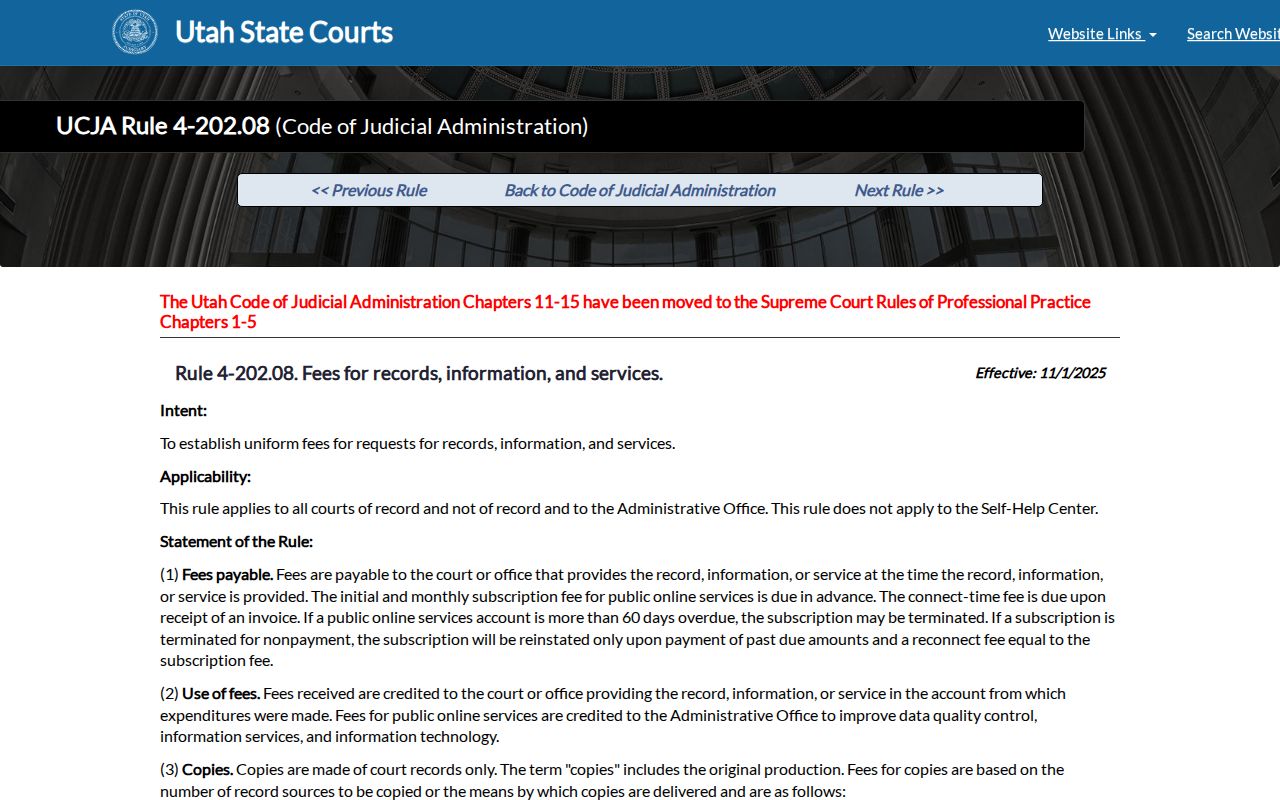
The official rule view ties the fee schedule to court-record service, not to whether a public case exists. Sometimes inspection alone is enough to identify the right paper. Ask to inspect first. Then order only the plain or certified copy you truly need.
Sealed Records and Public Access
Utah sorts its court records into four classes: public, private, protected, and sealed. Rule 4-202.02 spells out what each class covers. Rule 4-202.03 says who is allowed to view each one. Some categories carry tight limits. Juvenile cases, adoptions, expungements, and domestic or protective matters are examples. Medical and financial material is limited too. The state's official guidance on nonpublic records lays out these boundaries in plain terms.
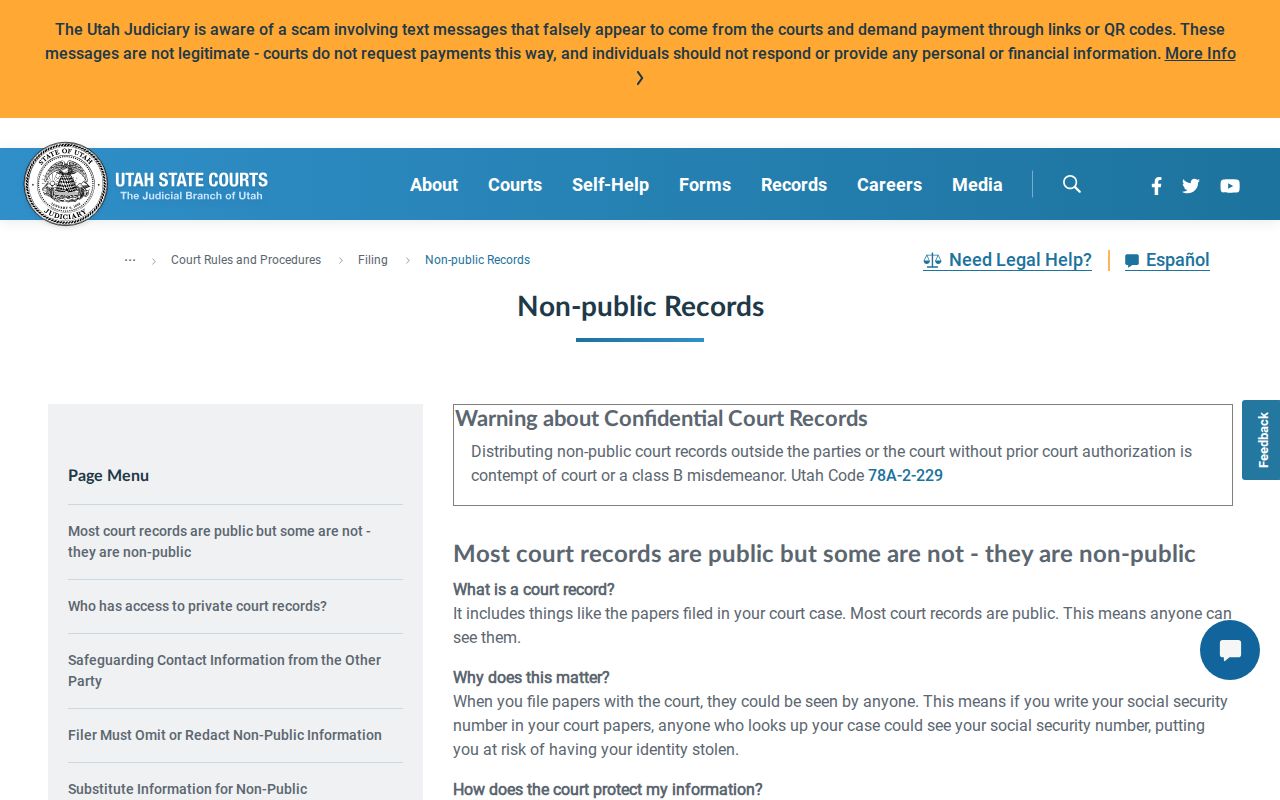
A case number that shows up in public view does not open every document in the file.
Access rule: Any person may request a public court record. A requester seeking a nonpublic item must show the legal status, authorization, or court order that permits access.
When a record is sealed or expunged, it should never show up in a public docket search. A blank result or a denial, though, is not proof the case never existed.